Go Green
Get a Quote
Go Green
1. What is a cold applied crack sealant?
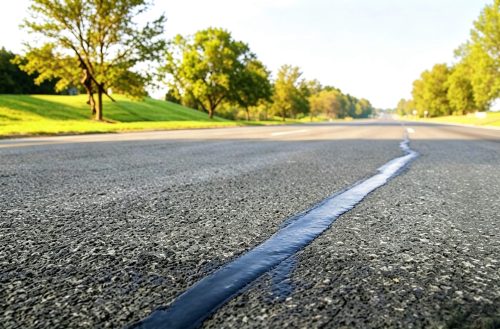
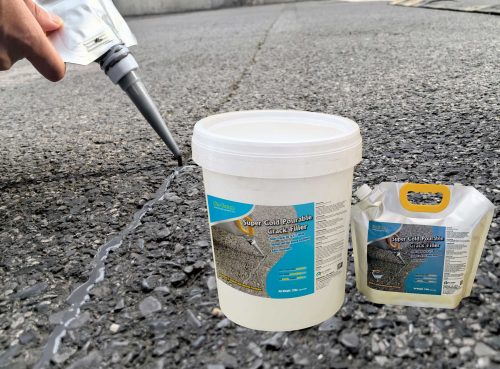
A cold applied crack sealant is a liquid sealant that can be applied directly to pavement cracks without heating. It is designed to seal cracks, prevent water penetration, and protect asphalt and concrete pavements from further deterioration. Go Green Silicone Cold Pourable Crack Filler is a single-component, self-leveling, low-modulus and highly elastic sealant for road crack repair.
2. What is the difference between cold applied and hot applied crack sealant?
The main difference is the application temperature. Hot-applied crack sealants need to be heated before application, while cold applied crack sealants can be used directly without heating. This makes cold applied sealants easier to handle, reduces equipment requirements, and allows faster crack repair with less preparation.
3. Can cold applied crack sealant be used on asphalt pavement?
Yes. Go Green Cold Pourable Crack Filler is specially designed for repairing cracks in asphalt pavement. It can be used for timely maintenance of asphalt roads, parking lots, airport pavements, and other asphalt surfaces.
4. Can it be used on concrete pavement?
Yes. The product can also be used to seal cracks and joints in concrete pavement. It is suitable for expansion joints, settlement joints, saw cuts, and construction joints in both asphalt and concrete surfaces.
5. Does cold applied crack sealant require heating?
No. Go Green Cold Pourable Crack Filler is a cold-applied material and does not require heating before application. This eliminates the need for hot-melt heating equipment and helps simplify the crack repair process.
6. How do you apply cold applied crack sealant?
First, clean the crack thoroughly and remove dust, debris, vegetation, and old incompatible sealant. For cracks approximately 4–15 mm wide, a caulking gun can be used. For cracks between 15–30 mm wide, a caulking gun or professional application equipment can be used.
For wider or deeper cracks, a suitable backer rod or fine sand can be inserted before applying the sealant.
7. How wide a crack can cold pourable crack filler repair?
Go Green Cold Pourable Crack Filler is suitable for typical pavement cracks less than approximately 10 mm wide, with actual material consumption depending on crack width and depth. For wider and deeper cracks, backer material should be used to control the sealant depth before application.
8. How much crack can 1 kg of sealant repair?
Approximately 1 kg of sealant can fill around 10 linear meters of typical pavement cracks less than 1 cm wide. Actual consumption will vary depending on the crack width, depth, and pavement condition.
9. How long does cold applied crack sealant take to cure?
The surface drying time can be approximately 0.5–2 hours, depending on local temperature, humidity, and other climate conditions. The product begins curing when it comes into contact with moisture in the air.
10. When can traffic reopen after crack sealing?
The pavement can generally be reopened after the sealant has sufficiently cured and the repaired surface is no longer vulnerable to traffic damage. Under suitable conditions, the drying time is approximately 0.5–2 hours. Actual reopening time should be determined according to local weather and site conditions.
11. Can cold applied crack sealant withstand extreme temperatures?
Yes. Go Green Silicone Cold Pourable Crack Filler has a reported weather resistance range of approximately -60°C to 150°C and is suitable for application temperatures from -10°C to 50°C. Its high elasticity allows it to accommodate pavement movement caused by temperature changes.
12. Is cold applied crack sealant waterproof?
Yes. The silicone-based sealant provides excellent adhesion and waterproof performance. Once cured, it helps prevent water from entering pavement cracks, reducing the risk of further deterioration caused by moisture and freeze-thaw cycles.
13. Does the sealant remain flexible after curing?
Yes. The product is a low-modulus, highly elastic silicone sealant with an elastic recovery rate of 93% according to the test results published on the product page. Its flexibility helps accommodate movement and expansion of pavement cracks.
14. Is cold applied crack sealant resistant to UV and weathering?
Yes. The silicone molecular structure provides strong resistance to UV exposure, aging, and weathering. The sealant is also resistant to acids, alkalis, salts, deicing agents, engine oils, and various solvents.
15. Can it be applied in cold weather?
Yes, within the recommended application conditions. Go Green Cold Pourable Crack Filler can be applied at temperatures from approximately -10°C to 50°C. However, application should be avoided during rain or snow, and the crack surface should be clean and dry.
16. How should pavement cracks be prepared before sealing?
The cracks must be thoroughly cleaned before application. Remove dust, dirt, loose particles, vegetation, and other contaminants. For previously repaired cracks, old sealant should also be removed, particularly when it is made from a different material, to ensure good adhesion between the new sealant and pavement.
17. Is cold applied crack sealant suitable for preventive pavement maintenance?
Yes. Sealing cracks at an early stage helps prevent water and moisture from entering the pavement structure and can slow down crack deterioration. Regular crack sealing is an important part of preventive asphalt and concrete pavement maintenance.
18. What are the main advantages of silicone cold applied crack sealant?
The main advantages include:
19. Is cold applied crack sealant better than hot pour crack sealant?
Both technologies have their own applications. Cold applied crack sealant offers significant advantages in convenience because it does not require heating equipment and can be applied directly from the package. Silicone-based cold pour sealants also provide excellent elasticity, weather resistance, and long-term performance. The most suitable product depends on crack dimensions, pavement conditions, climate, traffic, and project requirements.
20. How should cold applied crack sealant be stored?
The product should be stored in a cool, dry, and well-ventilated environment. The shelf life is approximately 12 months when stored under recommended conditions. Because it is a moisture-curing, single-component sealant, opened packages should be resealed tightly and used promptly.
21. Why choose Go Green Silicone Cold Pourable Crack Filler?
Go Green Silicone Cold Pourable Crack Filler combines easy cold application with high elasticity, strong adhesion, waterproofing, UV resistance, and excellent weather durability. It provides an efficient solution for repairing and sealing cracks in asphalt and concrete pavements without the need for heating equipment.

Armenian

Chinese (Simplified)

Chinese (Traditional)

English

French

German

Igbo

Korean

Romanian

Spanish

Thai
Send us your annual volume, climate and packaging requirements and we will come back with grading, pricing and lead time. We supply municipalities, contractors and distributors worldwide.
Mon–Fri, 09:00–18:00 (GMT+8) Replies within one business day