Go Green
Get a Quote
Go Green
1. What is Hot Melt Crack Sealant?
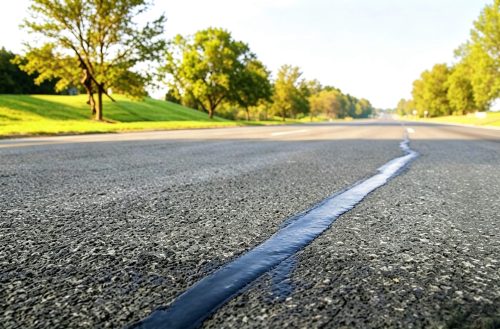
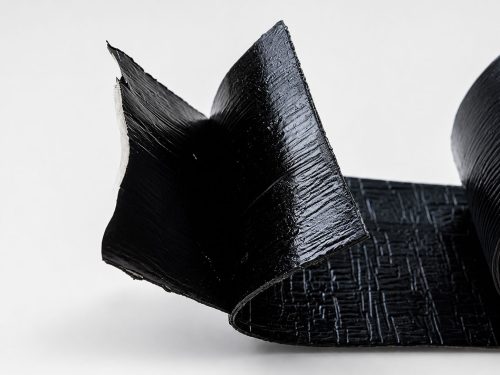
Hot Melt Crack Sealant is a polymer-modified asphalt-based material used to seal and repair cracks and joints in asphalt and concrete pavements. It is supplied in solid form and heated before application, allowing the sealant to flow into the prepared crack and form a flexible, waterproof seal.
It is designed to prevent water infiltration, reduce crack propagation and extend pavement service life.
2. What is Hot Melt Crack Sealant used for?
Hot Melt Crack Sealant is commonly used for:
It is particularly suitable for professional and large-scale pavement maintenance projects.
3. How does Hot Melt Crack Sealant work?
The sealant is heated until it reaches a fluid working state and then poured into prepared pavement cracks. After cooling, it forms a flexible and strongly bonded seal.
Its elasticity allows it to accommodate pavement movement caused by traffic loads and temperature changes, while its waterproofing properties help prevent moisture from penetrating into the pavement structure.
4. Does Hot Melt Crack Sealant require heating?
Yes. Unlike cold-applied crack fillers, Hot Melt Crack Sealant must be heated before application.
For Go Green® Hot Melt Crack Sealant, the recommended application temperature is 170°C–200°C. Proper temperature control helps achieve good flow, adhesion and complete filling of the prepared crack.
5. What equipment is required to apply Hot Melt Crack Sealant?
Professional crack sealing equipment is recommended, including:
The equipment helps maintain the sealant at the required temperature and allows controlled, uniform application.
6. How do you apply Hot Melt Crack Sealant?
The typical application process includes five steps:
Step 1 – Prepare the work area: Set up traffic safety signs and prepare the required equipment.
Step 2 – Route or groove the crack: Cut the crack to the required dimensions according to the project specifications.
Step 3 – Clean the crack: Remove dust, debris and loose materials using an air compressor or blower.
Step 4 – Heat and apply the sealant: Heat the sealant to approximately 170°C–200°C, then pour it into the prepared crack.
Step 5 – Allow the sealant to cool: After approximately 15–30 minutes, the repaired area can generally be reopened to traffic.
7. Should cracks be routed before applying Hot Melt Crack Sealant?
For professional crack sealing projects, routing or grooving is generally recommended when required by the project specification and crack condition.
Routing creates a controlled reservoir for the sealant and can improve the consistency of the repair. Go Green recommends groove dimensions of approximately 13–26 mm in width and depth, subject to the specific project requirements.
8. How should cracks be cleaned before sealing?
The crack must be thoroughly cleaned before application. Remove loose asphalt, dust, dirt, stones and other debris manually first, then use an air compressor or backpack blower to remove remaining particles.
Proper crack cleaning is essential for achieving strong adhesion between the sealant and pavement.
9. What temperature should Hot Melt Crack Sealant be applied at?
Go Green® Hot Melt Crack Sealant should be heated and maintained at approximately 170°C–200°C during application.
The sealant should be sufficiently fluid to completely fill the crack without creating voids, while avoiding excessive heating that could affect product performance.
10. Can Hot Melt Crack Sealant be used in cold weather?
Yes. Go Green® Hot Melt Crack Sealant is designed to maintain flexibility in low-temperature conditions and has a stated temperature adaptability range of approximately -30°C to 60°C.
When the pavement temperature is below 5°C, preheating the groove is recommended before application. The crack surface temperature is ideally above 10°C.
11. Is Hot Melt Crack Sealant suitable for hot climates?
Yes. The product is designed to resist flow and tire tracking under high-temperature conditions.
Go Green® Hot Melt Crack Sealant is formulated for temperature adaptability from approximately -30°C to 60°C, helping it maintain performance across a wide range of climates.
12. How long does Hot Melt Crack Sealant take to cure?
Hot Melt Crack Sealant does not require a long curing period like many liquid chemical sealants. After application, the material cools and solidifies.
Under suitable conditions, traffic can generally be reopened approximately 15–30 minutes after crack filling. Actual opening time may vary depending on ambient temperature, pavement temperature, application thickness and traffic conditions.
13. Can Hot Melt Crack Sealant prevent water from entering pavement cracks?
Yes. One of the primary purposes of crack sealing is to create a waterproof barrier that limits water infiltration through pavement cracks.
By reducing moisture penetration, crack sealing can help protect the underlying pavement structure and slow further pavement deterioration.
14. Can Hot Melt Crack Sealant withstand pavement movement?
Yes. Go Green® Hot Melt Crack Sealant has good elasticity and stretchability, allowing it to accommodate pavement displacement caused by thermal expansion, contraction and traffic loading.
Its elastic recovery and adhesion properties help the seal remain connected to the pavement as the crack changes over time.
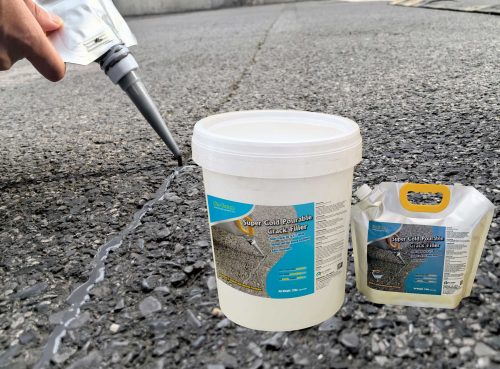
15. What is the difference between Hot Melt Crack Sealant and Cold Pourable Crack Filler?
The main difference is the application method.
Hot Melt Crack Sealant:
Cold Pourable Crack Filler:
The appropriate product depends on crack type, pavement condition, project scale and available equipment.
16. Can Hot Melt Crack Sealant be used on concrete pavement?
Yes. Hot Melt Crack Sealant can be used for suitable joints and cracks in both asphalt and Portland cement concrete pavement.
It can also be used for certain joints between asphalt and concrete surfaces, such as airport pavement applications.
17. Is Hot Melt Crack Sealant suitable for highways and heavy-traffic roads?
Yes. Hot Melt Crack Sealant is designed for professional pavement maintenance and provides strong adhesion, elasticity, high-temperature anti-tracking performance and low-temperature flexibility.
These properties make it suitable for highways, roads, parking areas and other pavement applications exposed to traffic loading.
18. What are the main advantages of Hot Melt Crack Sealant?
Go Green® Hot Melt Crack Sealant offers several advantages:
19. How should Hot Melt Crack Sealant be stored?
Hot Melt Crack Sealant should be stored in its original packaging in a dry and suitable storage environment, protected from excessive heat, moisture and contamination.
Go Green® Hot Melt Crack Sealant has an unopened shelf life of 1 year.
20. What is the packaging of Hot Melt Crack Sealant?
Go Green® Hot Melt Crack Sealant is supplied in 12.5 kg boxes, with 80 boxes per pallet. This packaging format is convenient for transportation, storage and handling on large pavement maintenance projects.
21. Does Hot Melt Crack Sealant meet industry standards?
Go Green® Hot Melt Crack Sealant has been tested with reference to standards including ASTM D6690-2007 and JT/T 740-2009.
The published test results include asphalt compatibility, penetration, elastic recovery, high-temperature flow and adhesion performance.
22. Why choose Go Green® Hot Melt Crack Sealant?
Go Green® Hot Melt Crack Sealant is developed for professional asphalt and pavement crack sealing applications. Its combination of strong adhesion, flexibility, temperature resistance and good application performance makes it a practical solution for long-term pavement maintenance.
For contractors, municipalities, road maintenance companies and distributors looking for a high-performance hot-applied asphalt crack sealant, Go Green® Hot Melt Crack Sealant provides a reliable solution for sealing pavement cracks and protecting roads from water infiltration.

Armenian

Chinese (Simplified)

Chinese (Traditional)

English

French

German

Igbo

Korean

Romanian

Spanish

Thai
Send us your annual volume, climate and packaging requirements and we will come back with grading, pricing and lead time. We supply municipalities, contractors and distributors worldwide.
Mon–Fri, 09:00–18:00 (GMT+8) Replies within one business day